Behavioral health treatments include therapy, medication, and structured programs like Partial Hospitalization Programs (PHP) and Intensive Outpatient Programs (IOP). SagePoint Behavioral Health offers these evidence-based options, including PHP at its Elk Grove location, to help individuals build coping skills and achieve lasting stability.
Key Takeaways
Behavioral health treatments include therapy, medication, and structured programs like Partial Hospitalization Programs and Intensive Outpatient Programs.
Psychotherapy involves structured conversations with a mental health professional to explore thoughts, emotions, and behaviors.
Behavioral therapy targets specific actions and thought patterns with structured exercises backed by decades of research.
A Partial Hospitalization Program delivers hospital-level services during the day while allowing clients to return home in the evenings.
What Are the Types of Behavioral Health Treatments?
Behavioral health treatments encompass a spectrum of care for mental health conditions and substance use disorders. The primary objective is building long-term stability through structured, evidence-based interventions. Types of Behavioral Health Treatments vary widely because no single approach works for every individual. Treatment for mental illness varies by diagnosis and by person, and there is no one-size-fits-all approach.
A core principle across all modalities is changing thoughts and behaviors. The goal of most treatments is to change thoughts and behaviors, and, if needed, manage physical dependence on drugs or alcohol. This focus on cognitive and behavioral patterns forms the foundation of recovery.
How do therapy and medication work together in treatment?
Therapy and medication often function as complementary tools. Innovations in evidence-based medications, therapy, and psychosocial services have made wellness and recovery a reality for people living with mental health conditions. A psychiatrist might prescribe medication to stabilize brain chemistry. A therapist simultaneously helps the individual develop practical coping skills.
What are the main categories of behavioral health care?
SagePoint Behavioral Health offers an Intensive Outpatient Program (IOP) and Partial Hospitalization Program (PHP). The main categories include:
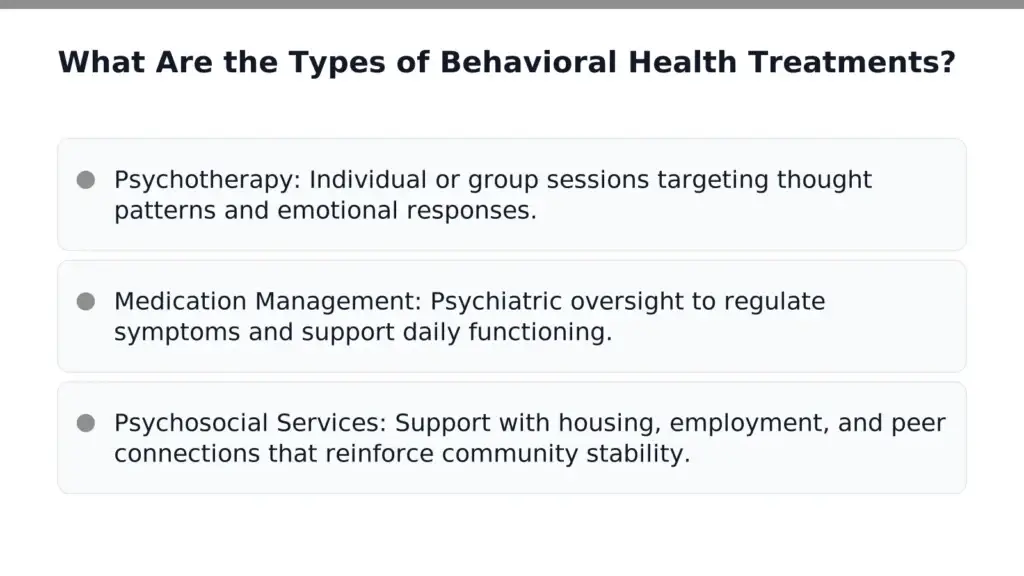
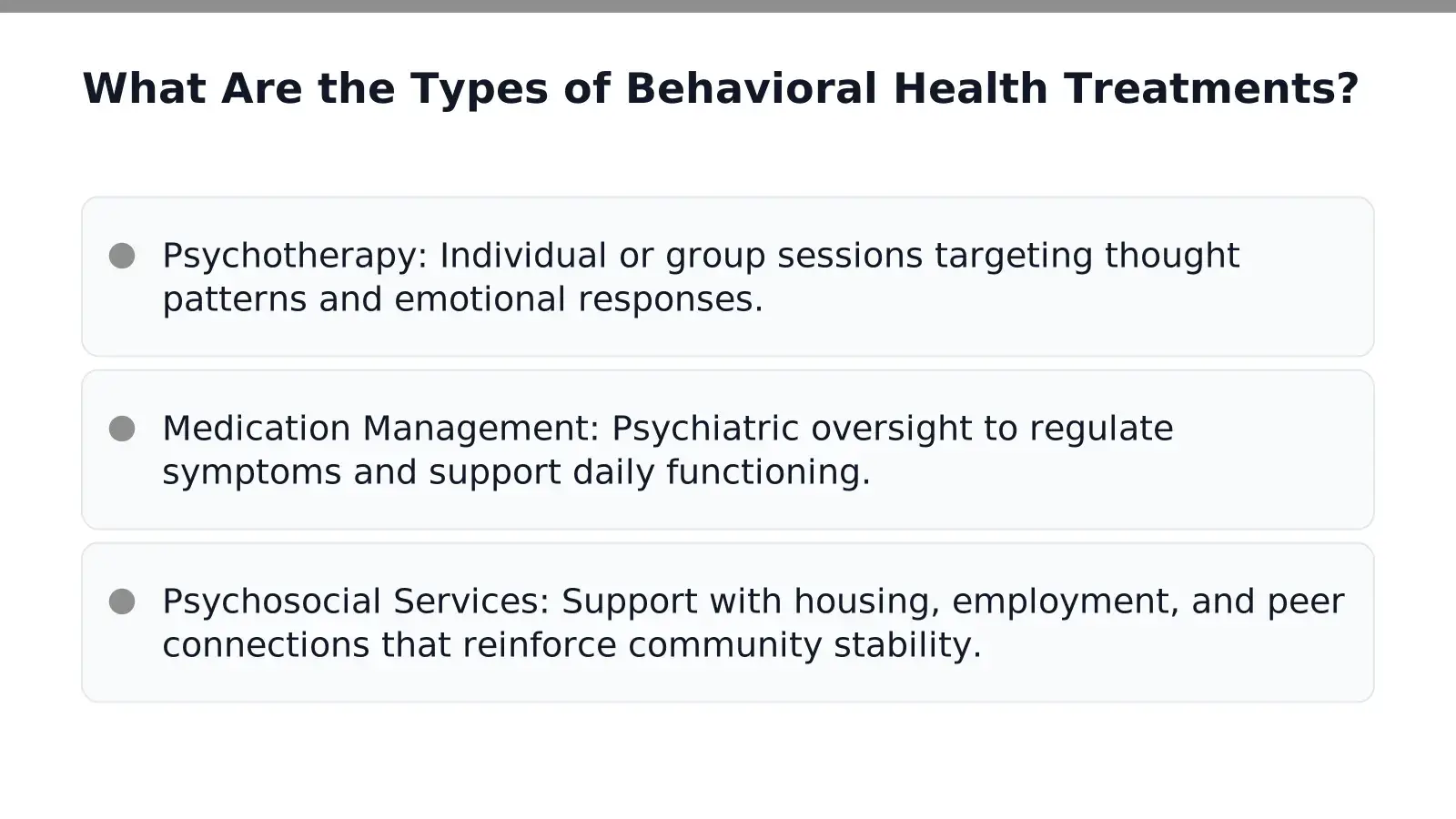
Psychotherapy: Individual or group sessions targeting thought patterns and emotional responses.
Medication Management: Psychiatric oversight to regulate symptoms and support daily functioning.
Psychosocial Services: Support with housing, employment, and peer connections that reinforce community stability.
These categories address different aspects of a person’s life. Understanding therapy types for mental health treatment helps individuals and families navigate these options. A comprehensive plan often combines elements from multiple categories to address the full scope of a person’s needs.
Which Therapy Modalities Are Most Effective?
No single therapy modality works for every person. Effectiveness depends on the diagnosis, the individual’s goals, and the severity of symptoms. The most widely supported approaches fall under two broad categories: psychotherapy and behavioral therapy. Both have decades of clinical validation behind them.
Psychotherapy, also called talk therapy, stands as one of the most common treatments for mental health disorders. It involves structured conversations with a mental health professional to explore thoughts, emotions, and behaviors. Family Doctor notes that this approach helps individuals understand their condition and develop healthier coping patterns. The process builds insight over time rather than offering a quick fix.
Behavioral therapy is an umbrella term for many distinct, evidence-based modalities. Each modality has its own methodology and clinical applications. The range includes cognitive behavioral therapy, dialectical behavior therapy, exposure therapy, and others. Behavioral therapy is widely practiced in clinical psychology, with decades of research supporting its effectiveness across a range of conditions. These methods focus on changing unhelpful thought patterns and behaviors through structured, measurable steps.
How do psychotherapy and behavioral therapy differ?
Psychotherapy explores the roots of emotional distress through dialog and reflection. Behavioral therapy targets specific actions and thought patterns with structured exercises. Both produce strong outcomes, but they operate on different timelines and mechanisms.
What makes a therapy modality evidence-based?
An evidence-based modality has been tested in controlled clinical trials and shown to produce measurable improvement. Decades of research back the behavioral therapy family. SagePoint Behavioral Health integrates evidence-based therapies with a holistic approach that addresses not only symptoms but also the underlying causes of these conditions. This dual focus strengthens long-term recovery outcomes.
Modality Type | Primary Focus | Typical Duration |
|---|---|---|
Psychotherapy | Emotional insight, past experiences | Months to years |
Behavioral Therapy | Current thoughts, actions, habits | Weeks to months |
The choice between modalities often comes down to the specific condition being treated. A person with panic disorder may respond faster to exposure-based behavioral work. Someone processing trauma might benefit more from the deeper exploration that psychotherapy provides. Matching the modality to the need drives the best results.
How Do Levels of Care Support Recovery?
Levels of care match treatment intensity to a person’s clinical needs. A structured continuum prevents gaps that lead to relapse or worsening symptoms. Without the right level of support, individuals risk losing progress made during earlier phases of treatment.
What Is a Partial Hospitalization Program?
A Partial Hospitalization Program (PHP) delivers hospital-level services during the day while allowing clients to return home in the evenings. This structure provides intensive, short-term treatment without an overnight stay. SagePoint Behavioral Health offers PHP services that help participants build coping skills and improve emotional regulation. The program serves as a bridge between inpatient stability and outpatient independence.
How Does an Intensive Outpatient Program Differ?
An Intensive Outpatient Program (IOP) offers structured therapeutic support for individuals who need more than traditional weekly therapy but do not require inpatient treatment. The IOP bridges the gap between highly intensive inpatient care and the greater independence of standard outpatient services. Treatment includes one-on-one appointments, group sessions, and learning about coping skills. These programs coordinate care more intensively than standard visits.
What Formats Are Available for These Programs?
SagePoint Behavioral Health provides its Intensive Outpatient Program in-person at its Sacramento location. This format ensures accessibility and convenience for each client’s lifestyle and comfort level. Clients receive evidence-based support in a structured, face-to-face setting.
Choosing the right level of care requires an honest assessment of symptoms and daily functioning. A person stepping down from inpatient treatment often benefits from PHP structure. Someone maintaining work or family responsibilities may find IOP more appropriate. Matching the program to the individual’s needs supports lasting stability and reduces the risk of returning to crisis.
FAQ
What types of behavioral health treatments does SagePoint Behavioral Health offer?
SagePoint Behavioral Health offers therapy, medication management, psychosocial services, a Partial Hospitalization Program, and an Intensive Outpatient Program.
Where does SagePoint Behavioral Health provide its Intensive Outpatient Program?
SagePoint Behavioral Health offers its Intensive Outpatient Program in-person in Sacramento.
How do therapy and medication work together in behavioral health treatment?
A psychiatrist prescribes medication to stabilize brain chemistry, while a therapist helps the individual develop practical coping skills.
Conclusion
Choosing the right behavioral health treatment requires matching the approach to the individual’s diagnosis, goals, and daily needs. A comprehensive plan often combines therapy modalities, medication management, and the appropriate level of care, whether that is a Partial Hospitalization Program or an Intensive Outpatient Program. Reviewing these options with a qualified professional helps families identify the structure that supports lasting stability. The next step is to schedule an assessment to determine which combination of evidence-based services fits the person’s current situation.