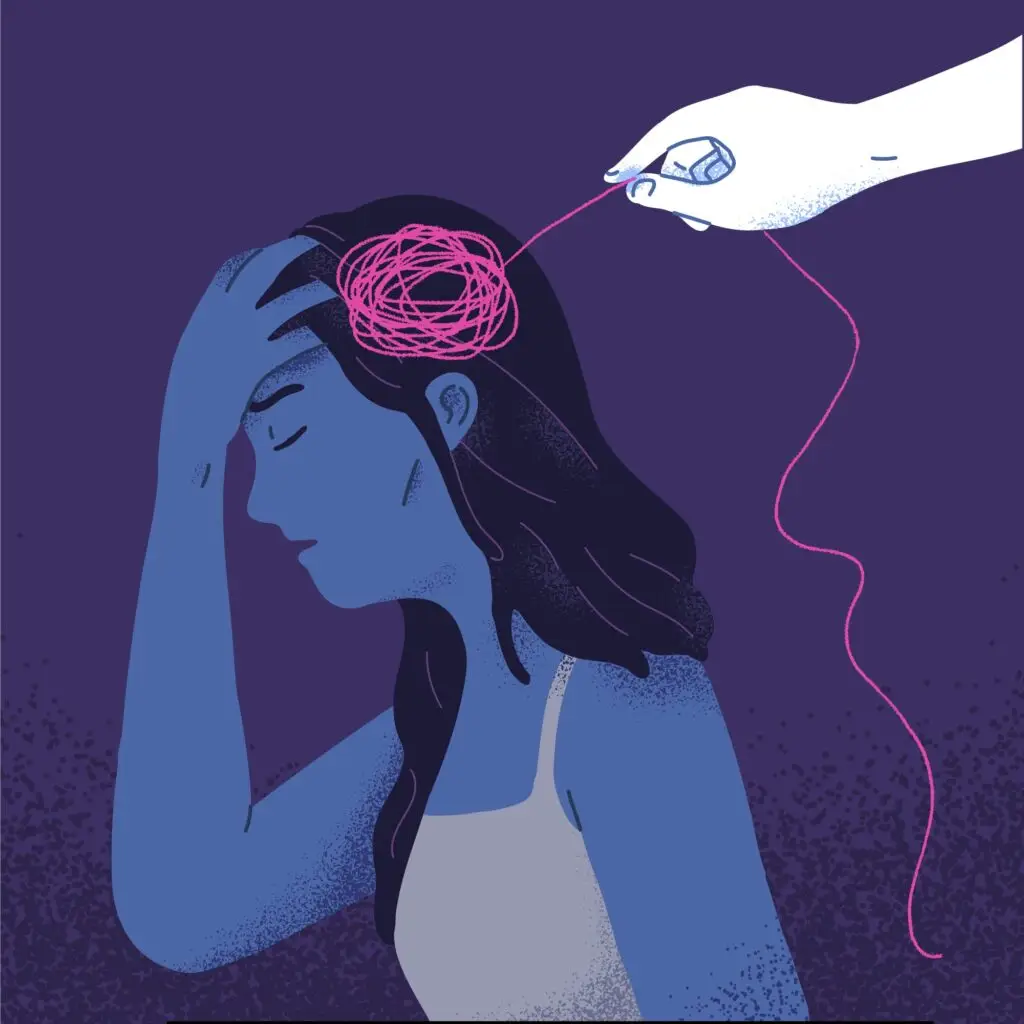
Recognizing When Your Mental Health Is Getting Worse — and What to Do Next
Mental health can shift slowly or change quickly. Noticing when it’s worsening is the first step toward getting the right help. Below, we’ll walk you through early emotional, behavioral, physical, and cognitive warning signs, how to decide when to seek professional care, and practical next steps for safety and treatment. “Worsening” means symptoms are lasting longer than normal stress, feel stronger than usual, and start to interfere with daily life. Understanding those patterns helps you act earlier and reduce long-term harm. You’ll find symptom checklists, simple decision rules for professional care, treatment options like Partial Hospitalization Program (PHP) and Intensive Outpatient Program (IOP), how co-occurring substance use is handled, and local resources in Elk Grove and Sacramento County. Read on for clear signs, short self-checks, therapy options, and how SagePoint Behavioral Health can support assessment and coordinated care when needed.
What Are the Early Warning Signs of Mental Health Decline?
Early warning signs show up as steady changes in mood, behavior, thinking, or physical health that go beyond normal stress and reduce how well you function. They can reflect conditions such as depression, anxiety, bipolar disorder, or trauma-related problems and should prompt closer monitoring or earlier help-seeking. Spotting these signs early lets you intervene sooner, which improves outcomes and lowers the risk of crisis. The list below summarizes common indicators across emotional, behavioral, physical, and cognitive areas so you can quickly check for concerning patterns and decide whether to track symptoms or seek an assessment.
Common early warning signs include the following:
- Ongoing sadness or hopelessness: Feeling down most of the day for weeks and losing motivation.
- Severe anxiety or panic: Repeated intense worry, agitation, or panic attacks that disrupt daily life.
- Pulling away from others: Avoiding friends, family, or activities you used to enjoy for an extended time.
- Changes to sleep or appetite: Sleeping or eating much more or less than usual, affecting energy and mood.
- Problems with focus or memory: Struggling to concentrate, remember things, or make decisions at work or home.
- Using substances more: Turning to alcohol or drugs more often to cope with feelings or stress.
- Increased irritability or mood swings: Sudden, persistent shifts in mood or frequent anger that feel out of character.
These signs aren’t a formal diagnosis but act as practical red flags. If several persist for two weeks or longer, the next section explains when to consult a professional.
Which Emotional and Mood Changes Indicate Worsening Mental Health?
Emotional changes that suggest decline tend to be more intense, longer-lasting, and disruptive than normal mood ups and downs. Persistent sadness, deep hopelessness, or losing interest in previously enjoyed activities are common signs of depression and often come with low energy and harsh self-criticism. Marked irritability, frequent tearfulness, or constant anxiety that makes work or relationships difficult also warrant evaluation. If emotional changes last more than two weeks, get worse despite self-care, or include thoughts of self-harm, seek a professional assessment promptly — it can clarify what’s happening and guide effective care.
What Behavioral Shifts Signal Mental Health Deterioration?

Behavioral shifts are often the most visible signs because they affect routines and responsibilities. Examples include withdrawing from friends, neglecting hygiene, missing appointments, dropping work or school performance, or taking more risks (like reckless driving or heavier substance use). These changes matter because they show functional decline: when behavior gets in the way of daily tasks, safety, or relationships, the problem is likely more than temporary stress. Noticing persistent behavior change allows for timely conversations, safety planning, and referral to structured care when appropriate.
How Do Physical and Cognitive Symptoms Reflect Mental Health Deterioration?
Physical and cognitive symptoms often show how closely mind and body are connected under stress. Physically, worsening mental health commonly causes sleep problems, chronic fatigue, appetite or weight changes, unexplained aches, and digestive complaints. Cognitively, you might notice slower thinking, trouble concentrating, memory lapses, or indecision that interfere with work and daily tasks. Recognizing these mind‑body signs supports a full assessment, because treating the underlying mental health issue often improves physical and cognitive symptoms — and addressing physical contributors can help mental health as well.
What Physical Manifestations Are Common in Worsening Mental Health?
Physical signs can appear before emotional symptoms are labeled and include persistent insomnia or oversleeping, ongoing fatigue, frequent headaches or stomachaches, and noticeable appetite or weight changes. These often stem from chronic stress responses and disrupted sleep cycles, which affect energy and pain sensitivity. Keeping a simple daily log of sleep, appetite, and pain can help clinicians spot patterns and triggers. If physical complaints persist without a clear medical cause, it’s wise to pursue a combined medical and mental health assessment so both contributors are addressed.
How Do Cognitive Difficulties Indicate Declining Mental Health?
Cognitive problems signal functional impact when they affect job performance, safety, or daily responsibilities. Common examples include trouble focusing, repeated forgetfulness, slowed processing, or racing thoughts. These issues come from disrupted attention networks and poor sleep and are often worsened by anxiety or depression. Practical strategies — lists, timers, and scheduled breaks — can help short-term, but persistent cognitive decline should prompt a professional evaluation to identify treatable causes like mood disorder effects, medication side effects, or substance use. Early assessment allows targeted steps to improve thinking and overall functioning.
When Should You Seek Professional Help for Mental Health Concerns?
Deciding to seek professional help depends on how long symptoms last, how intense they are, and how much they interfere with daily life. Seek a clinical assessment when symptoms persist beyond two weeks, grow more severe, or stop you from working, maintaining relationships, or caring for yourself. Immediately seek evaluation for any suicidal thoughts, self-harm, psychosis, or severe impairment. Early professional care shortens recovery, reduces chronicity, and lowers the chance of emergency situations. The checklist below can help you decide whether to schedule an evaluation or contact crisis services.
Use this checklist to assess need for professional help:
- Duration threshold: Symptoms lasting two weeks or more with little improvement despite self-care.
- Functional impairment: Clear decline in job performance, schoolwork, caregiving, or managing daily tasks.
- Severity and risk: Any active thoughts of self-harm, suicidal ideation, severe panic, or psychotic experiences.
- Escalating substance use: Growing reliance on substances to manage emotions or stress.
- Safety concerns: Behavior that risks harm to self or others, including severe neglect or inability to meet basic needs.
If one or more of these apply, scheduling a professional assessment is a sensible next step — early intervention improves outcomes and often prevents escalation. People in Elk Grove and Sacramento County can contact local providers for intake assessments and recommendations on appropriate levels of care.
After you decide to seek help, a licensed local clinician can arrange an assessment, review levels of care, and outline treatment options that match symptom intensity and personal needs.
What Criteria Determine the Need for Mental Health Intervention?
Clinicians base intervention decisions on three practical criteria: duration, severity, and impact. For the public, these translate into a simple self-check: how long symptoms have lasted (two weeks or more for mood issues), how intense they feel day to day, and whether they get in the way of responsibilities. Other risk factors — prior suicide attempts, substance misuse, major life stressors, or serious medical issues — raise urgency. If your self-check shows multiple criteria met, request a clinical intake; early triage can point to outpatient therapy, medication evaluation, or structured programs like IOP or PHP depending on risk and need.
How Does Early Intervention Improve Mental Health Outcomes?
Early intervention reduces how long symptoms persist, increases responsiveness to therapy and medication, and lowers overall healthcare use by preventing crises and hospitalization. Research and clinical experience show that the shorter the time untreated, the faster recovery tends to be and the better the social and occupational outcomes. Practical benefits include keeping jobs, repairing relationships, and avoiding the added problems that come with substance use or worsening physical health. Acting early — through assessment, brief therapy, or structured outpatient programs — creates a clearer path to steady improvement and lasting stability.
If you’re wondering what concrete programs and therapies are available, the next section outlines structured options — including PHP and IOP — and how to match them to common symptom profiles.
What Treatment Options Does SagePoint Behavioral Health Offer for Worsening Mental Health?
We use stepped, evidence-based care to match support to symptom severity and functional need. Partial Hospitalization Program (PHP) provides daily, structured therapeutic contact without an overnight stay for people who need intensive daily treatment. Intensive Outpatient Program (IOP) offers several weekly sessions for those who can keep some daily responsibilities but need more support than standard outpatient therapy. SagePoint Behavioral Health provides both PHP and IOP as well as evidence-based therapies — including CBT, DBT, Motivational Interviewing, Mindfulness, the Matrix Model, Relapse Prevention, ACT, and Somatic Therapy — to build individualized treatment plans. The table below offers a concise comparison to help choose the right level of care for common presentations.
| Program | Setting / Intensity | Who it’s for / Typical goals |
|---|---|---|
| Partial Hospitalization Program (PHP) | Day treatment with multiple daily therapy groups and clinical oversight | For people with significant symptom burden who need structured daily care while living at home; goals include stabilization and skill-building |
| Intensive Outpatient Program (IOP) | Multiple weekly group and individual sessions with flexible scheduling | For those with moderate symptoms who need regular support while maintaining work or family roles; goals include relapse prevention and coping skills |
| Standard Outpatient Therapy | Weekly individual or group sessions | For mild to moderate symptoms or as a step-down after IOP/PHP; goals include ongoing symptom management and maintenance |
How Do Partial Hospitalization and Intensive Outpatient Programs Support Recovery?
PHP and IOP combine several therapies, medical oversight, and peer support to speed stabilization and teach practical skills. PHP usually includes daily groups, individual therapy, psychiatric review, and case management — a concentrated option for people whose symptoms impair functioning but who don’t require inpatient care. IOP offers multiple weekly sessions focused on skill-building and relapse prevention while allowing patients to keep some daily routines. Both programs set measurable goals, emphasize relapse prevention, and plan transitions to lower-intensity outpatient care to support sustained recovery in the community.
Which Evidence-Based Therapies Address Specific Mental Health Symptoms?
Therapies work differently and matching the right approach to symptom patterns improves outcomes. Cognitive Behavioral Therapy (CBT) targets unhelpful thoughts and behaviors to reduce depression and anxiety. Dialectical Behavior Therapy (DBT) teaches emotion regulation and distress tolerance for severe mood instability or self-harm risk. Acceptance and Commitment Therapy (ACT) builds psychological flexibility for chronic anxiety and avoidance. Motivational Interviewing (MI) helps people resolve ambivalence and engage in change, especially with substance use. Somatic Therapy addresses bodily responses to trauma and stress, while the Matrix Model and Relapse Prevention provide structured strategies for substance use disorders. SagePoint weaves these approaches together in PHP and IOP to fit each person’s clinical needs.
| Therapy | Mechanism | Symptoms/Conditions Addressed |
|---|---|---|
| CBT | Cognitive restructuring and behavioral activation | Depression, anxiety, panic, unhelpful sleep-related thoughts |
| DBT | Emotion regulation and distress tolerance | Suicidal ideation, self-harm behaviors, severe mood instability |
| ACT | Values-based acceptance and committed action | Chronic anxiety, avoidance, rumination |
| Motivational Interviewing | Resolving ambivalence and boosting motivation | Substance use, low treatment engagement |
| Somatic Therapy | Body-focused regulation and processing | Trauma symptoms, somatic complaints, chronic stress |
| Matrix Model / Relapse Prevention | Structured relapse planning and coping strategies | Substance Use Disorders and co-occurring conditions |
How Are Co-occurring Mental Health and Substance Use Disorders Recognized and Treated?
When mental health conditions and substance use interact, they require integrated assessment and treatment because each can worsen the other. Recognition often comes from patterns like mood or anxiety worsening alongside increased substance use, using substances to numb emotional pain, or lack of improvement with single-focus treatment. Integrated care blends behavioral therapies, relapse prevention, and coordinated medical management so both conditions are addressed together, improving engagement and outcomes. The guidance below outlines common signs of dual diagnosis and how integrated models such as the Matrix Model and Relapse Prevention are used in structured programs to reduce relapse risk.
Common red flags suggesting co-occurring substance use and mental health decline include:
- Rising use to cope: Substance use increases during mood or anxiety spikes and begins to interfere with responsibilities.
- Symptoms that don’t respond to treatment: Mood or anxiety problems persist despite therapy and may be hidden or worsened by substance effects.
- Functional decline and risky behavior: Growing legal, financial, or relationship problems related to substance use or impulsivity.
When these signs appear, combined assessment and safety planning are essential to determine immediate needs and the appropriate level of integrated care.
| Sign | Possible meaning | Suggested treatment approach / SagePoint service |
|---|---|---|
| Increasing substance use with mood swings | Substances may be used to self-medicate and can worsen mood disorders | Integrated assessment followed by IOP using the Matrix Model and Relapse Prevention |
| Persistent anxiety that worsens with use | Anxiety may be amplified by substance effects or withdrawal | Combined therapy (CBT/ACT) with medication evaluation and coordinated care |
| Recurrent relapse after outpatient care | An unaddressed co-occurring disorder likely needs higher-intensity integrated treatment | Consider PHP or IOP with targeted relapse prevention and case management |
What Signs Indicate Co-occurring Substance Use and Mental Health Decline?
Signs of a dual diagnosis include using substances to numb emotions, a clear link between increased use and worse mood, repeated failed attempts to stop, and escalating legal or social problems tied to use. Substance use can mask psychiatric symptoms or create new ones through intoxication and withdrawal, which complicates diagnosis. Immediate steps include a frank assessment of frequency and function of use, safety planning when risk is present, and quick referral to integrated services when substance use is harming treatment response. Early integrated care reduces relapse risk and improves overall psychiatric outcomes.
How Does SagePoint Address Dual Diagnosis in Treatment Programs?
SagePoint Behavioral Health uses an integrated dual-diagnosis model that combines structured relapse prevention (like the Matrix Model) with evidence-based therapies and coordinated medical oversight. Our intake assesses both mental health and substance use patterns to determine whether IOP or PHP is the best fit. Treatment plans can include combined group work, individual counseling, and aftercare planning. This coordinated approach addresses how substance use and psychiatric symptoms interact and supports long-term recovery with relapse prevention and alumni resources.
What Local Resources and Support Are Available in Elk Grove and Sacramento County?
Local supports range from crisis hotlines and county behavioral health services to peer support groups and community clinics, each serving different needs and urgency levels. Crisis teams offer immediate safety support, while community clinics and peer groups provide ongoing therapy and connection. Access can depend on transportation, scheduling, and virtual care options; providers often offer warm referrals to ease transitions. The table below summarizes common resource types, what they do, and practical access notes to help you navigate local options and see how a coordinating provider can help.
| Resource | Service type | Contact/Access note |
|---|---|---|
| County Behavioral Health Services | Crisis evaluation and intake for public programs | Accessible through county behavioral health intake lines and mobile crisis teams |
| Community Mental Health Clinics | Low-cost counseling and case management | Often offer sliding-fee options and referrals to local supports |
| Peer Support Groups | Peer‑led recovery meetings and mutual support | Valuable for social connection and relapse prevention |
| Crisis Hotlines / Mobile Crisis Teams | Immediate safety intervention | Use for suicidal ideation, severe agitation, or acute risk |
Which Community Services Assist Individuals Experiencing Mental Health Decline?
Community services include crisis hotlines and mobile response teams for immediate danger, county behavioral health intake for public care, community clinics for counseling and case management, and peer-run groups for ongoing social support. Which service to use depends on urgency: crisis teams for imminent danger, clinics for ongoing therapy access, and peer groups for long-term support. Providers and care coordinators can help by connecting you to the right service, explaining eligibility, and helping set up the first appointment to reduce barriers.
How Can SagePoint Facilitate Access to Local Mental Health Resources?
SagePoint Behavioral Health supports access through coordinated intake, warm referrals, and transition planning from higher-intensity programs back to community resources. We offer in-person services in Elk Grove and virtual IOP options to improve scheduling flexibility and continuity of care. Our clinicians work with county services and local clinics to ensure aftercare plans include appropriate supports, transportation options, and peer resources. If you’re unsure which step fits, scheduling a free consultation or intake assessment with a licensed SagePoint clinician can clarify program fit and referral choices.
Frequently Asked Questions
What are the long-term effects of untreated mental health issues?
Untreated mental health issues can lead to lasting consequences: persistent emotional distress, strained relationships, and lower quality of life. People may face worsening symptoms that affect work, increase isolation, and raise the risk of substance use. Untreated conditions can also harm physical health, contributing to problems like high blood pressure and weakened immunity. Early help reduces these risks and improves the chances of a full recovery.
How can I support a friend or family member showing signs of mental health decline?
Supporting someone starts with listening without judgment and showing empathy. Encourage them to seek professional help and offer practical assistance — for example, help find resources or go with them to an appointment. Be patient, keep communication open, and learn about the condition so you can respond effectively. Also protect your own well-being; supporting someone can be emotionally demanding, so seek support for yourself when needed.
What role does lifestyle play in mental health management?
Lifestyle choices matter for mental health. Regular activity, a balanced diet, and consistent sleep support emotional stability and can reduce symptoms of anxiety and depression. Social connection and supportive relationships are important protective factors. Mindfulness, relaxation practices, and routines can help manage stress. While lifestyle changes aren’t a substitute for clinical care when it’s needed, they strengthen recovery and resilience.
Are there specific therapies for children and adolescents with mental health issues?
Yes. Treatment for young people is adapted to their age and development. Play therapy helps younger children express feelings, while CBT is effective for older children and teens in changing unhelpful thoughts and behaviors. Family therapy involves caregivers in the process to improve communication and support. Early, age‑appropriate intervention often leads to better long-term outcomes.
How can I recognize if my mental health is improving during treatment?
Improvement often shows up as reduced symptom intensity or frequency, better sleep and energy, and greater ability to manage daily tasks and relationships. You may feel more hopeful, engage more with others, and cope better with stress. Regularly reviewing progress with your therapist helps track change and adjust treatment as needed.
What should I do if I feel overwhelmed by my mental health symptoms?
If you feel overwhelmed, reach out to someone you trust and let them know how you’re feeling. Contact a mental health professional for an assessment and guidance. If you’re in immediate crisis or having thoughts of self-harm, call a crisis hotline or local emergency services right away. Prioritizing safety and asking for help are important first steps — you don’t have to go through it alone.
Conclusion
Noticing the signs of worsening mental health makes timely help possible. Understanding early warning signs and when to seek professional care improves outcomes and supports recovery. If you or someone you care about is showing these symptoms, consider reaching out to a local provider for guidance. Explore available resources and take the next step toward better mental health today.