Cognitive behavioral therapy equips clients with practical tools to reframe unhelpful thoughts and build lasting coping skills. SagePoint Behavioral Health integrates this evidence-based approach into comprehensive mental health care, supporting recovery from anxiety, depression, and substance use disorders. Structured sessions help individuals replace negative patterns with healthier behaviors, fostering measurable progress toward stability and long-term wellness.
Key Takeaways
CBT equips clients with practical tools to reframe unhelpful thoughts and build lasting coping skills.
Structured sessions help individuals replace negative patterns with healthier behaviors, fostering measurable progress toward stability.
CBT treats depression, anxiety disorders, PTSD, eating disorders, and substance use disorders effectively.
Core skills include thought restructuring, behavioral activation, and relapse prevention for long-term resilience.
What is cognitive behavioral therapy and how does it work?
Cognitive behavioral therapy is a structured form of talk therapy that helps individuals identify and change distorted thinking patterns. A person works with a licensed therapist in a limited number of sessions to examine the relationship between thoughts, feelings, and behaviors. Looking at this connection, as explained by Mayo Clinic, helps someone view challenging situations more clearly and respond in a more effective way. Without this awareness, automatic negative thinking cycles continue unchecked and worsen emotional distress.
What conditions does cognitive behavioral therapy treat?
CBT treats a range of mental health conditions. The therapy proves effective for depression and anxiety disorders. Individuals with post-traumatic stress disorder or eating disorders also benefit from the approach. Substance use disorders respond well to CBT’s focus on breaking harmful thought-behavior loops.
How does the cognitive behavioral therapy process work?
The process begins with identifying problematic thinking patterns. A therapist guides the individual to recognize automatic thoughts that trigger painful emotions or destructive behaviors. The person then practices new coping responses during sessions and between appointments. This active, skills-based approach distinguishes CBT from other forms of psychotherapy.
Cognitive Behavioral Therapy Benefits extend across multiple domains of mental health. The structured format provides measurable progress markers that help individuals track improvement week by week. SagePoint Behavioral Health integrates these evidence-based methods into its Intensive Outpatient Program. The IOP combines individual counseling, group therapy, and peer support into a personalized care plan tailored to each person’s unique circumstances. This layered approach reinforces the skills introduced in one-on-one sessions.
Progress does not always happen quickly. Each small step helps build greater confidence and emotional stability. The limited-session format encourages focused effort while preventing dependency on the therapeutic relationship. Clients learn tools they carry forward long after treatment ends.
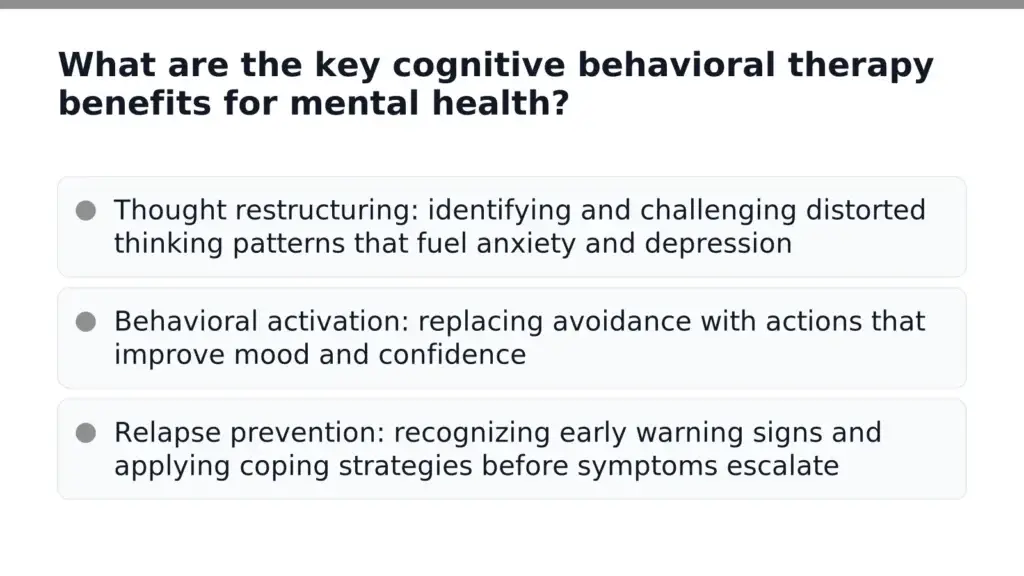
What are the key cognitive behavioral therapy benefits for mental health?
Cognitive behavioral therapy (CBT) delivers measurable improvements in emotional regulation, coping ability, and long-term stability. The Cognitive Behavioral Therapy Benefits center on changing negative thought patterns to change behaviors and build healthier responses to stress. Without these structured skills, individuals managing anxiety, depression, or substance use disorders often remain trapped in cycles that worsen over time.
CBT helps individuals view challenging situations more clearly and respond to them in a more effective way. The therapy examines the relationship between thoughts, feelings, and behaviors, creating a framework that replaces reactive patterns with deliberate choices. This structured approach gives clients a repeatable method for navigating distress.
How does CBT build coping skills that last after treatment ends?
CBT builds practical coping skills that create resilience enduring long after treatment ends. Participants receive focused guidance aimed at strengthening emotional regulation abilities and developing relapse prevention strategies. These tools transfer directly to daily life, from managing workplace stress to resisting substance use triggers.
What specific skills does CBT teach for long-term stability?
The core skills fall into three categories:
Thought restructuring: identifying and challenging distorted thinking patterns that fuel anxiety and depression
Behavioral activation: replacing avoidance with actions that improve mood and confidence
Relapse prevention: recognizing early warning signs and applying coping strategies before symptoms escalate
CBT emphasizes changing negative thought patterns to change behaviors. Well as developing and implementing healthy coping skills into daily life. SagePoint Behavioral Health integrates these methods into structured treatment programs that help clients maintain essential responsibilities while building emotional stability.
How does CBT supports recovery from substance use disorders and co-occurring conditions?
Cognitive behavioral therapy addresses substance use disorders by targeting the thought patterns that drive addictive behaviors. Cognitive Behavioral Therapy Benefits extend across mood disorders, anxiety conditions, and substance use challenges alike. The approach focuses on cognition, examining how thoughts influence mood and subsequent behavior. Without this structured intervention, individuals risk cycling through the same destructive patterns that reinforce dependency and emotional distress.
What role do thought patterns play in addiction recovery?
CBT identifies automatic negative thoughts that trigger substance use. A person experiencing a craving learns to recognize the thought, challenge its validity, and replace it with a healthier response. This cognitive restructuring breaks the link between stressful triggers and the compulsion to use substances. Over time, new neural pathways strengthen, making relapse less likely.
How does structured therapy address co-occurring conditions?
Many individuals face both addiction and conditions like depression or anxiety simultaneously. CBT treats these overlapping disorders within a unified framework. The same cognitive distortions that fuel substance use often sustain mood disorders. By addressing both concurrently, therapy prevents one condition from undermining progress in the other. Fragmented treatment leaves gaps where untreated symptoms can reactivate addictive behaviors.
SagePoint Behavioral Health offers an Intensive Outpatient Program designed to bridge the gap between inpatient care and traditional outpatient services for mental health and substance use disorders. The program provides consistent comprehensive treatment while enabling participants to maintain essential responsibilities such as work, school, and family obligations. This structure delivers the intensity needed for recovery without requiring complete separation from daily life.
Skill building: Participants develop coping strategies for high-risk situations
Relapse prevention: Therapy equips individuals to identify and manage triggers before they escalate
Dual diagnosis support: Integrated treatment addresses substance use and co-occurring mental health conditions together
The combination of cognitive restructuring and practical skill development creates a durable foundation for sobriety. Individuals leave treatment with tools they can apply immediately when facing real-world challenges.
What are the long-term cognitive behavioral therapy benefits for emotional resilience and relapse prevention?
Cognitive behavioral therapy builds coping skills that endure long after treatment ends. These skills form the foundation of lasting emotional resilience and effective relapse prevention. Without them, individuals face a higher risk of symptom recurrence and functional decline.
Cognitive Behavioral Therapy Benefits extend far beyond symptom reduction during active treatment. The therapy rewires automatic thought patterns that trigger emotional distress. Participants learn to identify distorted thinking before it spirals into crisis. This early-intervention capability becomes a permanent mental habit. It protects against future episodes of anxiety, depression, or substance use.
SagePoint Behavioral Health structures its programs around three long-term outcomes. First, participants develop practical coping skills that create resilience enduring well beyond the treatment timeline. Second, they build personalized relapse prevention strategies tailored to their specific triggers and vulnerabilities. Third, they strengthen emotional regulation abilities that support stability across life domains. The clinical team brings over 140 years of combined experience in the behavioral health field to this work.
How does CBT prevent relapse after treatment ends?
CBT prevents relapse by transforming how individuals interpret high-risk situations. A person who once viewed a stressful event as catastrophic learns to see it as manageable. This cognitive shift removes the desperation that fuels relapse. Structured practice during therapy makes these responses automatic over time.
What makes emotional resilience from CBT last long-term?
The durability comes from skill internalization rather than temporary support. Clients do not simply receive coping strategies. They practice and refine these tools until the responses become reflexive. Emotional regulation moves from conscious effort to ingrained habit. That transition explains why gains persist for years after the final session.
FAQ
What conditions does cognitive behavioral therapy treat?
CBT treats depression, anxiety disorders, post-traumatic stress disorder, eating disorders, and substance use disorders by breaking harmful thought-behavior loops.
How does SagePoint Behavioral Health integrate CBT into its programs?
SagePoint integrates CBT into its Intensive Outpatient Program, combining individual counseling, group therapy, and peer support into a personalized care plan.
What core skills does CBT build for long-term recovery?
CBT builds thought restructuring, behavioral activation, and relapse prevention skills, giving clients tools to carry forward after treatment ends.
Conclusion
Cognitive behavioral therapy equips individuals with lasting skills to reshape thought patterns and prevent relapse. For those ready to build emotional resilience and break cycles of addiction or distress, structured CBT programs provide the framework for sustainable recovery. Taking this step transforms temporary progress into enduring stability.
Call SagePoint Behavioral Health today to speak with our team and take the first step toward lasting recovery.