Why SagePoint Behavioral Health Is a Trusted Choice for Addiction Treatment in California
SagePoint Behavioral Health offers clinician-led, evidence-based Partial Hospitalization (PHP) and Intensive Outpatient (IOP) programs that combine structured clinical care with a boutique, person-centered setting. This guide explains how PHP and IOP differ in schedule and goals, which evidence-based therapies we use, why trauma-informed practice matters, and how flexible delivery — including a statewide virtual IOP — expands access. Too often people seeking recovery find fragmented or one-size-fits-all options; here we outline practical differences across outpatient levels and show how tailored, clinician-led teams support lasting change. After clarifying program definitions and clinical approaches, we profile founder Caroline Bentley, LMFT, describe local and statewide service options, and offer context on outcomes and next steps. If you’re exploring care, SagePoint provides a free consultation so you can discuss the right level of care and enrollment with a clinician.
What Unique Programs Does SagePoint Behavioral Health Offer for Addiction Recovery?
Partial Hospitalization Programs (PHP) and Intensive Outpatient Programs (IOP) are structured outpatient options that deliver therapeutic intensity without overnight stays. SagePoint provides both within a clinician-led, boutique model. PHP offers concentrated, daily therapeutic engagement for people who need closer supervision and consistent structure. IOP delivers fewer weekly hours and more flexibility for clients balancing work, school, or family. Core components usually include group therapy, individual sessions, psychiatric consultation, relapse-prevention work, and family involvement — all coordinated by licensed clinicians. The table below compares who typically benefits from each level and the primary schedule differences to help with decision-making and referrals.
This side-by-side view highlights the practical differences between PHP and IOP and sets up the more detailed program workflows below.
How Do Partial Hospitalization Programs Support Mental Health and Substance Use Recovery?
A Partial Hospitalization Program (PHP) delivers concentrated therapeutic contact by combining multiple evidence-based approaches in a day-treatment format to stabilize symptoms and lower hospitalization risk. PHP typically uses structured daily groups, individual therapy, psychiatric evaluation, and medication management when indicated. That intensity helps address acute withdrawal distress, co-occurring mental health symptoms, and high relapse potential. A sample day might include morning skills groups, mid-day psychotherapy, afternoon case management or family sessions, and evening planning for community supports — routines that build accountability and make transitions to lower levels of care smoother. In short, a well-run PHP can improve engagement and reduce readmission compared with unsupported transitions.
What Are the Benefits of Intensive Outpatient Programs at SagePoint?
Intensive Outpatient Programs (IOP) emphasize flexibility while teaching practical skills that support recovery in everyday life. IOP focuses on cognitive and behavioral skill-building through group therapy, individual check-ins, and homework that’s designed to be used at work, home, and in social settings — a good fit for people who don’t require round‑the‑clock supervision. Our virtual IOP extends access across California, helping clients maintain continuity after relocation or when they live far from in-person services; in-person groups strengthen local peer ties and community supports. Together, these elements make IOP a cost-effective, evidence-based option for many people stepping down from higher care or seeking structured outpatient support.
How Does SagePoint’s Clinician-Led, Boutique Approach Enhance Addiction Treatment in Elk Grove?
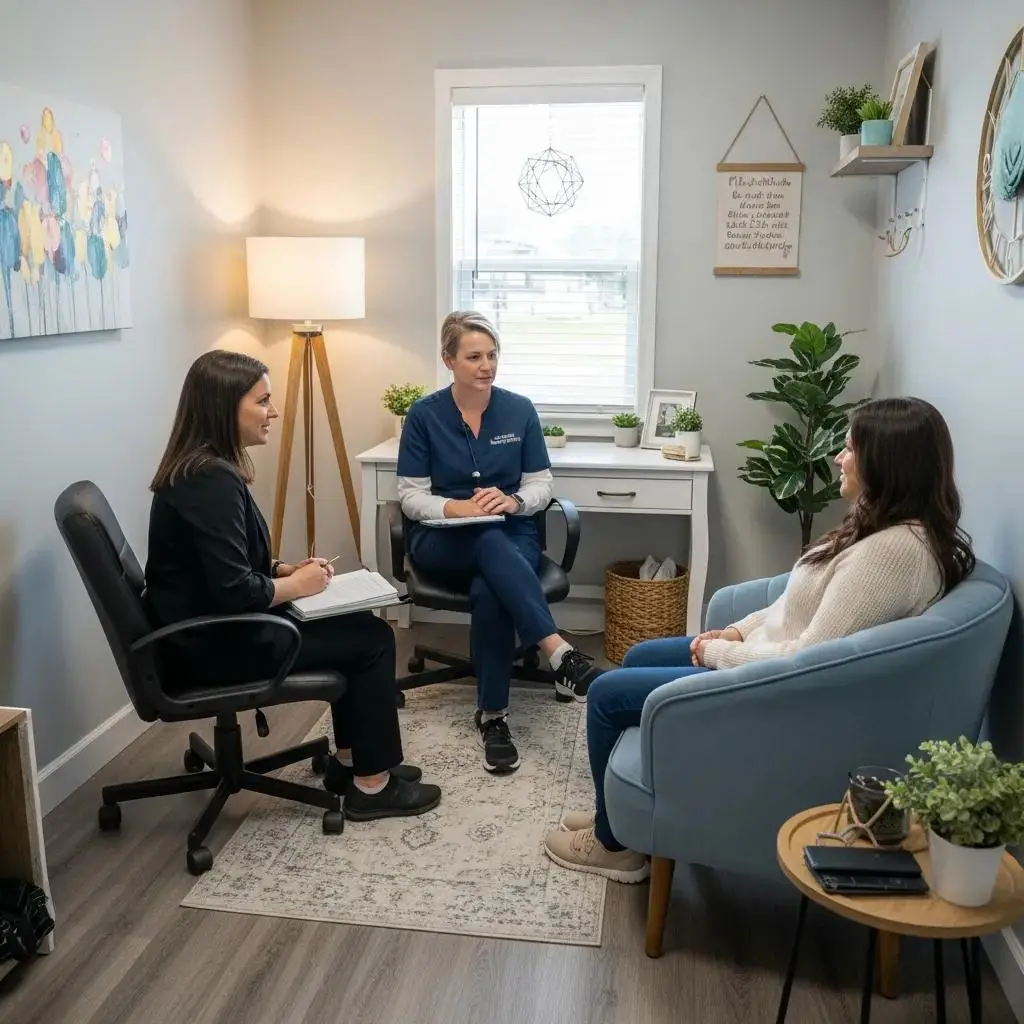
Our clinician-led, boutique model places licensed clinicians at the center of program design and day-to-day clinical oversight, producing more consistent therapeutic relationships and individualized care than larger, non-clinician-driven facilities. Clinician leadership keeps assessment, level-of-care decisions, and progress reviews aligned with each client’s goals instead of throughput metrics. Small group sizes common in boutique settings deepen peer connection, protect privacy, and speed personalization of treatment strategies — all of which support engagement and adherence. Key benefits of this approach include:
- Personalized care plans: clinicians adjust treatment quickly based on clinical response.
- Consistent clinician oversight: licensed providers regularly review progress and coordinate care.
- Small group dynamics: fewer participants mean more individual participation and safety.
- Comfortable environment: a less institutional setting reduces stigma and supports healing.
These features shape daily clinical practice and lead naturally into a brief profile of the clinician-founder behind this model.
Who Is Caroline Bentley, LMFT, and What Is Her Vision for Personalized Care?
Caroline Bentley, LMFT, is SagePoint’s founder and clinical lead. Her vision centers on clinician-driven programs — PHP and IOP overseen by licensed professionals and built around individualized, trauma-informed plans rather than one-size-fits-all protocols. Under her leadership, clinical decisions about intensity and therapeutic modalities are guided by client goals and clinical need, supporting stronger engagement and clearer, personalized recovery pathways. Knowing this founder-led approach helps explain why small-group formats and clinician consistency are emphasized across our services.
How Does a Boutique Environment Improve Healing Compared to Larger Centers?
A boutique environment lowers institutional barriers to recovery by offering greater privacy, faster clinician access, and quicker adjustments to treatment when client needs change. In smaller programs, clinicians can better observe group dynamics, respond to safety concerns, and adjust level of care with fewer administrative delays — all helpful for clients with complex or shifting needs. Examples include quicker scheduling of family sessions when relationship issues affect relapse risk and faster introduction of trauma-focused work when symptoms emerge in group. Operationally, these advantages create a therapeutic culture that values individualized pacing and close clinician collaboration, supporting more durable recovery.
Which Evidence-Based Therapies Does SagePoint Use for Addiction and Mental Health Treatment?
SagePoint combines evidence-based modalities — including Cognitive Behavioral Therapy (CBT), Dialectical Behavior Therapy (DBT), Acceptance and Commitment Therapy (ACT), somatic therapy, Motivational Interviewing (MI), and Matrix Model elements — to treat substance use and co-occurring mental health conditions. Each approach targets a different mechanism: CBT addresses thought–behavior links, DBT builds emotion regulation, ACT encourages values-driven action, somatic work addresses body-stored trauma responses, and MI strengthens motivation to change. The table below links therapies to their targets and shows how clinicians apply them across PHP and IOP to support measurable skill development.
The table below shows therapies, their primary targets, and SagePoint applications.
This multi-modal integration supports a holistic recovery pathway and leads into specific CBT and DBT applications below.
How Are Cognitive Behavioral Therapy and Dialectical Behavioral Therapy Applied at SagePoint?
CBT and DBT are core group and individual modalities we use to teach concrete relapse-prevention skills and address co-occurring symptoms. CBT focuses on identifying automatic thoughts, building behavioral experiments, and creating coping plans to break substance-use patterns. DBT emphasizes emotion regulation, interpersonal effectiveness, and distress tolerance to reduce impulsive or self-harming responses. In PHP, clients may engage in daily CBT/DBT skills work with homework and coaching; IOP schedules concentrate on consolidating those skills in the community with regular clinician review. Together, these approaches offer cognitive reframing and practical coping tools that improve decision-making in high-risk situations.
What Role Do Acceptance and Commitment Therapy and Somatic Therapy Play in Recovery?
ACT and somatic therapy complement cognitive-behavioral work by addressing motivation and trauma-related body responses that often underlie relapse. ACT helps clients clarify values and take committed action even when cravings or difficult emotions occur, supporting long-term adherence to recovery goals. Somatic therapy targets the body’s stress responses through grounding, breathwork, and interoceptive awareness to reduce trauma-triggered cravings and hyperarousal. When integrated with CBT and DBT, ACT and somatic techniques create a fuller treatment package that addresses thinking, emotion, motivation, and embodied trauma responses.
Why Is Trauma-Informed Care Essential in SagePoint’s Addiction Treatment Programs?
Trauma-informed care acknowledges that many people with substance use disorders have trauma histories, so treatment must prioritize safety, choice, collaboration, and empowerment to avoid retraumatization and support lasting recovery. Applying trauma-informed principles changes clinical practice: assessments screen for trauma, clinicians offer pacing and options for exposure work, somatic and stabilization techniques are integrated, and clients participate in shared decision-making. Programs that use these principles typically see higher engagement and better-tailored relapse-prevention plans that address trauma-related triggers. Key trauma-informed principles and expected program outcomes include:
- Safety: creating predictable, physically and emotionally secure environments.
- Trustworthiness & transparency: clear communication about care plans and expectations.
- Peer support & collaboration: involving peers and families to strengthen recovery.
- Empowerment: fostering client choice and strengths-based planning.
These principles inform specific practices — for example, offering choices around exposure work and prioritizing stabilization before trauma processing — which we describe next.
How Does Trauma-Informed Care Support Lasting Recovery at SagePoint?
Trauma-informed care promotes lasting recovery by reducing triggers, increasing engagement, and improving treatment response through individualized pacing and safety planning. Practices include offering participation choices, using grounding and somatic stabilization before trauma-focused work, and involving peer or family supports to reinforce trust and accountability. These strategies lower the risk of retraumatization during therapy and create a collaborative space where clients can practice relapse-prevention skills. By embedding trauma-informed care across PHP and IOP, clinicians help clients move from stabilization to sustained, community-based recovery.
What Makes SagePoint’s Trauma-Informed Approach Unique in Elk Grove and Sacramento?
SagePoint’s clinician-led boutique format lets us apply trauma-informed principles with more flexibility and personalization than larger centers, which makes our approach distinctive in Elk Grove and the greater Sacramento area. Smaller groups let clinicians pace interventions responsively, tailor safety planning, and provide frequent individual check-ins when trauma symptoms arise. Offering a virtual IOP statewide also broadens access to trauma-informed services for clients who can’t attend in person while preserving clinician oversight across settings. These local and access-focused adjustments make trauma-informed care practical and scalable for a range of needs.
How Does SagePoint Serve Elk Grove, Sacramento County, and California with Flexible Addiction Treatment?
SagePoint serves local clients in Elk Grove and Sacramento County with in-person PHP and IOP options and extends reach across California via a virtual IOP, blending local engagement with statewide access. In-person services offer community-based supports and face-to-face group dynamics valuable to many clients, while virtual IOP removes travel barriers and supports continuity when clients relocate or face transportation limits. The service table below clarifies which offerings are in-person versus virtual and notes areas served to help prospective clients and referral partners choose the best intake path.
This breakdown helps clients and referral partners identify the most appropriate access route and leads into practical benefits of virtual care.
What Are the Advantages of Virtual Intensive Outpatient Programs Across California?
Virtual IOPs expand access by eliminating commute time, connecting clients in rural or distant areas to structured care, and making it easier to balance treatment with work and family responsibilities. Telehealth supports continuity when clients move or travel and can reduce stigma by allowing participation from private, familiar environments. Technology needs are typically basic — secure video access and a private space — and virtual programs maintain clinical accountability through scheduled group and individual sessions. For many Californians seeking outpatient addiction treatment, virtual IOP is a practical, evidence-informed option.
How Does SagePoint Address Local Needs in Elk Grove and Sacramento County?
SagePoint meets local needs by offering boutique outpatient services focused on lowering barriers to care, increasing access to licensed clinicians, and supporting dual-diagnosis treatment within an outpatient framework. Local challenges — limited specialized outpatient capacity and stigma around treatment — are addressed through small-group formats that emphasize privacy and stronger clinician relationships. For clients who need higher-intensity or adjunct supports, our clinicians coordinate referrals to complementary services like residential treatment, medically supervised detox, alumni groups, and medication-assisted treatment providers to preserve continuity across the care continuum. These locally responsive practices extend the reach of our outpatient services while keeping care clinician-led and personalized.
What Success Stories and Outcomes Demonstrate SagePoint’s Effectiveness in Addiction Recovery?
Outcomes for outpatient addiction care vary, but benchmarks for structured programs generally show meaningful reductions in substance use and functional improvements when evidence-based therapies and continuity supports are in place. Clients in boutique, clinician-led programs often report that personalized attention, strong therapeutic alliances, and practical skill-building were central to their recovery. While SagePoint will publish specific program metrics when available, prospective clients can evaluate effectiveness by asking about completion rates, follow-up supports, and how the program coordinates continuing care. If you want to learn about individualized outcomes and next steps, SagePoint offers a free consultation to discuss your recovery goals and enrollment options.
What Do Client Testimonials Reveal About SagePoint’s Personalized Care?
Client testimonials from boutique, clinician-led settings frequently highlight consistent clinician relationships, the safety and support of small groups, and the real-world usefulness of learned skills. Common themes include improved coping strategies, the value of trauma-informed pacing, and discharge plans that connect clients with community resources. These qualitative insights support claims about personalized care and clinician engagement. If you’d like to learn more about fit or program atmosphere, request a free consultation to talk through your needs with a clinician.
How Do Completion and Abstinence Rates at SagePoint Compare to Other Treatment Centers?
Completion and abstinence benchmarks vary by population and program intensity; many structured outpatient programs report moderate to strong short-term reductions in substance use when evidence-based therapies and follow-up care are in place. Because specific SagePoint percentages are not yet published, it’s best practice for providers to share completion rates, abstinence outcomes, and follow-up success so prospective clients can make informed comparisons. Programs that combine evidence-based therapies, trauma-informed care, and robust aftercare planning generally show better retention and outcomes than non-specialized options. You can use a free consultation with SagePoint to discuss typical pathways, expected results, and appropriate benchmarks for your situation.
Frequently Asked Questions
What is the process for enrolling in SagePoint’s programs?
Enrollment starts with a free consultation where you’ll speak with a licensed clinician about your situation. During that meeting, the clinician assesses your needs, recommends the appropriate level of care, and explains the enrollment steps. This individualized approach ensures you get clear guidance as you begin your recovery plan. After the consultation, we’ll help with paperwork and schedule your first sessions according to the recommended program.
Are there any financial assistance options available for treatment?
SagePoint recognizes that cost can be a barrier. We offer financial assistance options such as sliding-scale fees and work with insurance partners when possible. Ask about payment plans and coverage during your initial consultation so we can help identify an affordable pathway to care.
How does SagePoint ensure the quality of its therapeutic services?
Quality is maintained through a clinician-led model that emphasizes ongoing training, supervision, and use of evidence-based practices. Licensed clinicians regularly review treatment plans and client progress, and we incorporate client feedback to continuously improve programs. This approach supports a supportive environment where clients can make meaningful progress.
What role do family members play in the treatment process?
Family involvement is an important part of recovery at SagePoint. We encourage family participation through educational sessions, family therapy, and support groups to strengthen communication and build a supportive environment for the client. Integrating family can enhance long-term recovery and help repair relationships affected by substance use.
What aftercare services does SagePoint provide to support ongoing recovery?
Our aftercare services are designed to support the transition back to daily life. These may include continued therapy, support groups, and connections to community resources. Aftercare reinforces skills learned in treatment and provides a safety net as clients navigate recovery challenges. We maintain contact after discharge to help reduce relapse risk and encourage sustained progress.
How does SagePoint address co-occurring mental health issues in clients?
SagePoint treats co-occurring mental health conditions alongside substance use by integrating specialized modalities into PHP and IOP. Clinicians are trained to identify and treat both issues simultaneously, creating tailored plans that address the full complexity of each client’s needs. This dual-diagnosis approach improves the chances of effective, lasting recovery.
Conclusion
Choosing SagePoint Behavioral Health means accessing personalized, evidence-based care that centers your recovery goals. With flexible PHP and IOP options — available in person and virtually — we help you find the right level of support. Our clinician-led approach ensures treatment is tailored, trauma-informed, and delivered in a comfortable, boutique setting. To take the next step, schedule a free consultation and speak with a clinician about the best way forward for your recovery.