
Support groups for mental wellness create peer-led spaces where individuals share experiences and coping strategies under trained facilitation. SagePoint Behavioral Health recognizes that consistent support, whether in-person or virtual, strengthens long-term behavioral health outcomes. Members gain practical tools for managing stress, anxiety, or depression while building a supportive community network.
Key Takeaways
Support groups for mental wellness provide peer-led spaces where individuals share experiences and coping strategies under trained facilitation.
Consistent support, whether in-person or virtual, strengthens long-term behavioral health outcomes.
Support groups serve as a bridge between clinical treatment and daily life, complementing individual therapy with peer perspectives.
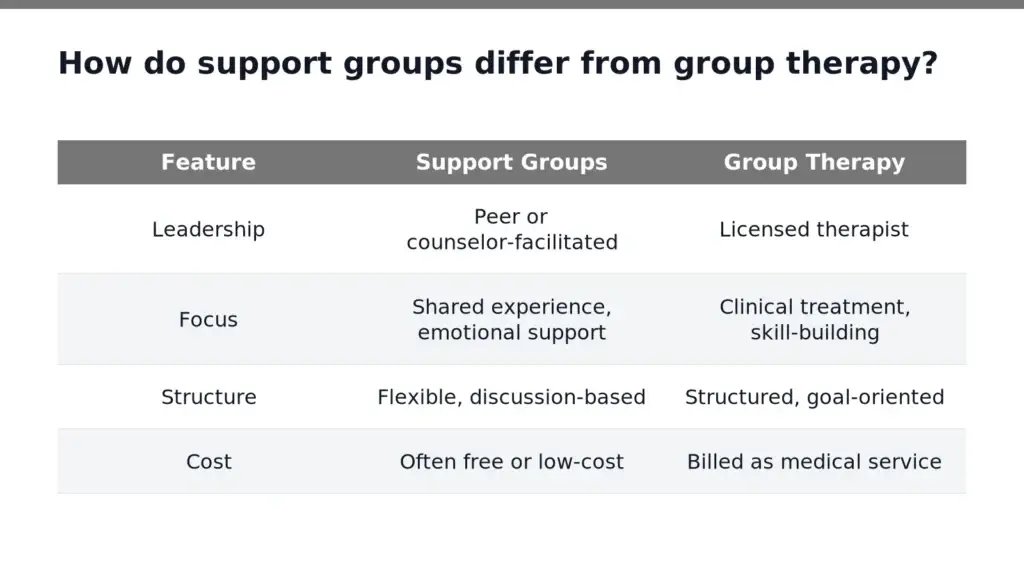
A support group focuses on shared experience and mutual encouragement, while group therapy delivers structured clinical treatment led by a licensed therapist.
What is a support group for mental wellness?
A support group for mental wellness gathers individuals who share a common experience or concern. Participants come together to give each other emotional and moral support. These groups create a structured environment where people talk openly about feelings and personal challenges. A professional counselor often leads the sessions, guiding discussion and maintaining a safe, respectful space. Without this connection, isolation deepens and recovery becomes harder to sustain.
Support Groups for Mental Wellness serve as a bridge between clinical treatment and daily life. They complement individual therapy by adding peer perspectives that no single clinician can provide. The Teen Health and Wellness resource defines a support group as people who share a common experience and offer mutual emotional support. This peer dynamic reduces the feeling of being alone in a struggle.
How do mental health support groups work?
A trained facilitator keeps conversations productive and ensures everyone has a chance to speak. Members share coping strategies that worked for them in real-world situations. The group setting normalizes difficult emotions and reduces shame.
What if in-person meetings are not accessible?
Online groups, chat rooms, and message boards help when face-to-face meetings are not nearby. These digital options remove geographic barriers and offer flexible scheduling. A person in a rural area gains the same connection as someone in a city. SagePoint Behavioral Health recognizes that consistent support, whether in-person or virtual, strengthens long-term behavioral health outcomes.
How do support groups differ from group therapy?
Support groups and group therapy serve distinct purposes in mental health care. Support Groups for Mental Wellness operate as peer-driven gatherings. Participants exchange emotional support and practical advice drawn from lived experience. The dynamic remains reciprocal: individuals give help to others and receive help in return. A professional counselor may facilitate the session, but the primary goal stays focused on connection rather than clinical intervention.
Group therapy follows a different model. A licensed therapist leads each session using evidence-based techniques to address specific diagnoses. The work targets symptom reduction, skill-building, and behavioral change. SagePoint Behavioral Health integrates group therapy benefits for recovery into comprehensive treatment plans, where clinical oversight guides every interaction.
Feature | Support Groups | Group Therapy |
|---|---|---|
Leadership | Peer or counselor-facilitated | Licensed therapist |
Focus | Shared experience, emotional support | Clinical treatment, skill-building |
Structure | Flexible, discussion-based | Structured, goal-oriented |
Cost | Often free or low-cost | Billed as medical service |
Who leads a mental health support group?
A support group is usually led by a professional counselor or by trained peers. The facilitator guides discussion but does not deliver therapy. The main goal remains offering emotional support and practical advice.
Is group therapy more effective than a support group?
Effectiveness depends on individual needs. Group therapy treats diagnosed conditions through clinical methods. Support groups provide ongoing community and reduce isolation. Many individuals benefit from participating in both simultaneously.
What are the key benefits of joining a support group?
Support Groups for Mental Wellness deliver a core benefit that individual therapy alone cannot replicate: shared experience. A support group connects individuals facing similar mental health challenges. This connection directly reduces the crushing sense of isolation that mental illness symptoms and social stigma create. A mental health support network helps diminish that isolation by surrounding a person with others who truly understand.
How does shared experience reduce feelings of isolation?
Being with others in a support group helps people feel supported and less alone as they face their challenges. The group setting transforms a private struggle into a collective one. Members give help and receive it in return, creating a reciprocal dynamic that rebuilds trust and social confidence.
What roles do members play in a mental health support network?
A mental health support network is a group of people who each provide a unique role. These roles ensure that a person’s emotional and physical needs are addressed. One member might offer practical coping strategies. Another provides a listening ear during a late-night crisis. This structured, multi-layered support is difficult to replicate through a single therapeutic relationship. Without this network, individuals risk remaining trapped in a cycle of loneliness that worsens their condition.
How can I find the right support group for my needs?
Finding the right Support Groups for Mental Wellness starts with evaluating a group’s activity and format. A prospective member should ask whether recent posts come from a variety of different people, not just one or two voices. This signals an engaged, diverse community rather than a stagnant space. Support groups operate at multiple scales. They may be local, national, or international, and they can meet in-person or online. Matching the format to personal comfort and logistical needs narrows the search considerably.
What questions reveal whether a group is active and healthy?
A group with posts from many different members in the past week offers broader perspectives. A single dominant voice often indicates limited support. Checking how quickly new members receive responses also matters. Slow or absent replies suggest the group lacks the energy needed for meaningful connection.
Who belongs in a broader mental health support network?
A complete network extends beyond peer groups. A mental health network can include counselors and other mental health professionals, medical doctors, and loved ones. Each person fills a designated role. The therapist addresses clinical needs. The physician monitors physical health factors. Family and friends provide daily emotional reinforcement. SagePoint Behavioral Health encourages clients to build this layered structure. Peer support groups fill a gap that clinical and personal relationships cannot cover alone.
FAQ
What is a support group for mental wellness?
A support group gathers individuals who share a common experience to give each other emotional and moral support, often led by a professional counselor.
What if in-person meetings are not accessible?
Online groups, chat rooms, and message boards remove geographic barriers and offer flexible scheduling, providing the same connection as in-person meetings.
How much does it cost to join a support group?
Many support groups are free or low-cost, unlike group therapy, which is typically billed as a medical service.
Can I participate in a support group and group therapy at the same time?
Yes. Group therapy treats diagnosed conditions through clinical methods, while support groups provide ongoing community and reduce isolation. Many individuals benefit from participating in both at the same time.
How do I know if a support group is the right fit for me?
Look for groups with posts and replies from a variety of members in the past week, which signals an engaged, diverse community. Matching the format, local, national, in-person, or online, to personal comfort and logistics also helps narrow the search.
Conclusion
Support groups offer a practical, evidence-based step toward mental wellness by replacing isolation with shared understanding. Whether you choose an in-person or online format, the right group provides the consistent connection that strengthens long-term stability. Evaluate a group’s activity and format to find a healthy fit, then take that first step toward building a support network that complements your clinical care. If you have questions about finding the right support group, call SagePoint Behavioral Health, our team is ready to help.